
Removing old wallpaper can be a daunting task, especially if you're not equipped with the right tools. A wallpaper steamer remover is a handy device that makes the process easier and faster. The steamer works by loosening the adhesive that holds the wallpaper to the wall, making it easier to peel off in large pieces.
In this article, we'll explore how to use one of the best wallpaper remover solutions — a wallpaper steamer. We will provide some tips and tricks to help you achieve a smooth and efficient wallpaper removal experience.
What is a Wallpaper Steamer?
A wallpaper steamer is a tool used for removing wallpaper from walls. It works by using hot steam to soften the adhesive that binds the wallpaper to the wall. This makes it easier to remove the wallpaper in large sections, minimizing the need for scraping or other manual removal methods that can damage the wall.
A wallpaper steamer typically consists of a tank that holds hot water in, a heating element or small steam plate that generates steam, and a nozzle that directs the steam onto the wallpaper. It is a useful tool for anyone looking to tackle a home renovation project involving wallpaper removal.
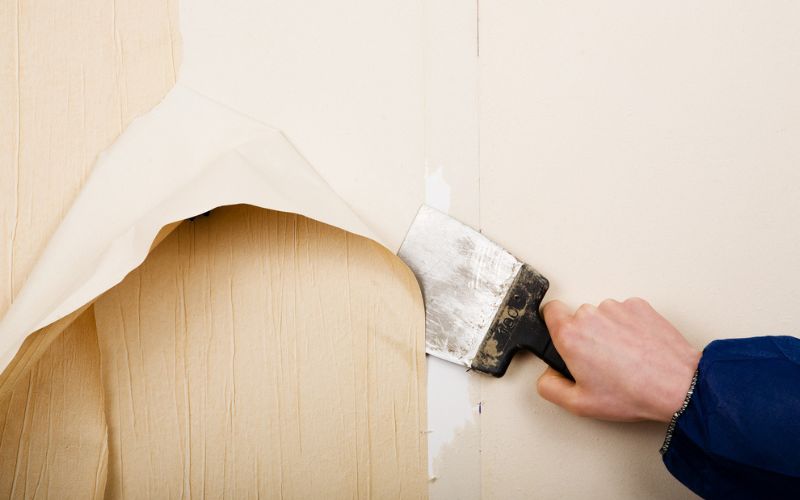
Preparing the Walls and Ceiling for Wallpaper Removal
Before using a wallpaper steamer to remove wallpaper, it's important to properly prepare the walls and ceiling. First, remove any fixtures, outlet covers, or other objects attached to the wall. Then, score the wallpaper's surface with a scoring tool to allow the steam to penetrate and loosen the adhesive.
Next, cover the floor with a drop cloth to catch any debris. Finally, use a solution of warm water and wallpaper remover to saturate the wallpaper, which will further aid in effective removal by loosening the adhesive. By properly preparing the walls and ceiling, you'll make the wallpaper removal process much easier and efficient.
Using a Wallpaper Steamer
Using a wallpaper steamer is a straightforward process that can make removing old wallpaper a breeze. To start, fill the steamer with water and turn it on to allow it to heat up. Once it's ready, hold the steamer's nozzle against the wallpaper, directing steam to the paper for several seconds.
The steam will loosen the wallpaper's adhesive, making it easier to peel off in large sections. Use a scraper to help lift the wallpaper as needed. Be careful not to damage the wall, and work in small sections to avoid overwhelming yourself.
Drywall or Plaster Walls
When using a wallpaper steamer or wallpaper stripper on drywall or plaster walls, it's important to take some precautions to avoid damaging the wall. First, test the steamer in an inconspicuous area to ensure it doesn't cause any damage. Then, work in small sections, holding the steamer's nozzle against the wallpaper for no more than 30 seconds at a time to avoid saturating the drywall or plaster with steam.
Finally, use a scraper to gently lift the wallpaper, taking care not to damage the wall. With proper care, using a wallpaper steamer can make removing wallpaper from drywall or plaster walls a breeze.
Using a Wallpaper Scoring Tool
A wallpaper scoring tool is a small tool that can make removing wallpaper easier by perforating the surface of the wallpaper. To use a scoring tool, press it firmly against the wallpaper and drag it in a circular or vertical motion, creating small perforations in the paper's surface. This will allow the steam or the wallpaper adhesive remover solution to penetrate the wallpaper and loosen the adhesive more effectively.
By using a scoring tool, you can make the wallpaper removal process faster and less frustrating.
Remove Wallpaper Effectively
When removing wallpaper, there are a few signs to look for to determine whether or not you're making progress. If the wallpaper is coming off in large, easy-to-remove sections, that's a good indication that you're removing it effectively.
If the wallpaper is only coming off in small pieces or is leaving behind large amounts of adhesive residue, you may need to use a wallpaper remover steamer or a chemical wallpaper stripper to help loosen the wallpaper glue further. Additionally, if the wall is damaged or gouged during the removal process, that's a sign that you may need to adjust your technique or wallpaper stripper tools.

Do Wallpaper Steamers Really Work?
Yes, wallpaper removers that use steam can be an effective tool for removing temporary wallpaper or strippable wallpaper. The hot steam helps to loosen the adhesive, making the wall coverings easier to remove in large sections. However, the effectiveness of a wallpaper steamer can depend on the type and age of the wallpaper, as well as the condition of the wall.
Title: Wallpaper Steamer Remover
Meta Description: A wallpaper steamer is an effective way to help remove wallpaper without leaving residues on your walls. Here are some tips and tricks to help make the wallpaper removal process easier!
Vinyl siding is a popular choice for homeowners due to its durability, low maintenance requirements, and ease of installation. Installing vinyl siding trim around windows can be a tricky process, but with the right tools, preparation, and techniques, it can be done effectively. In this article, we'll provide a step-by-step guide to installing vinyl siding around windows, including tips and tricks for achieving a flawless finish.
Required Tools for This Project
To install vinyl siding around vinyl windowsill, there are a few specific tools needed. These include:
- Measuring tape
- Level
- Circular saw
- Utility knife
- Tin snips
- Drill
- Screws
- Nails
- Caulking gun
It's important to ensure one has the right tools for the job to achieve a professional-looking finish and make the installation process as efficient as possible.
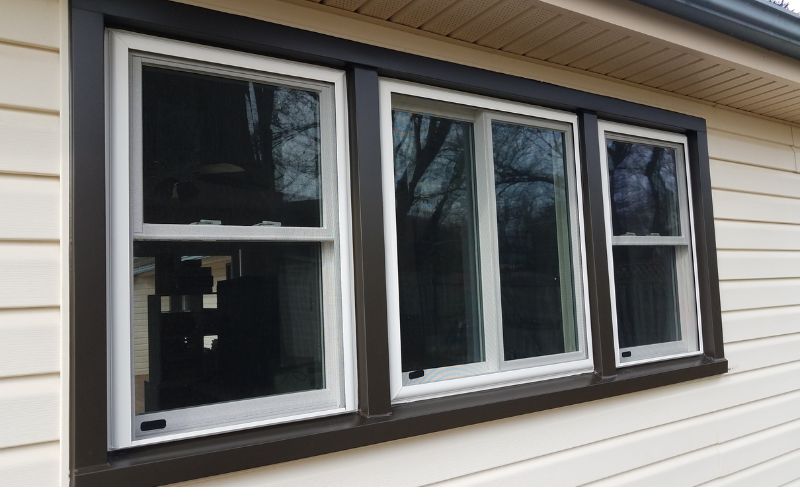
How to Install Vinyl Siding Trim Around Windows
To install vinyl siding after installing window casing, one should first measure the window and cut the siding to size. The next step is to secure the J-channel around vertical sides of the window casing and install the siding panels. Then trim the excess siding and finish the job by caulking any gaps. It's important to follow the manufacturer's instructions and take one’s time to ensure a smooth and professional-looking finish.
What is a J-Channel?
A J-channel is a vinyl accessory used for siding installation. A J-channel is shaped like the letter "J" and is used to secure the edges of siding panels. It's typically used around doors, windows, and other openings in the wall to provide a finished look and protect against moisture infiltration. The J-channel is installed by attaching it to the wall, leaving a gap for the bottom edge of the siding panel to slide into. The siding is then secured in place with roofing nails or screws, and the J-channel provides a channel for water to drain away from the wall and building paper. J-channels are available in various sizes and colors to match the siding and trim.
Mark the Cuts for Siding Under the Window
To mark the cuts for siding under the window, hold a piece of siding against the bottom of the window casing and mark where it overlaps the top of the previously installed piece with a utility knife, pencil, or other tool. Use a circular saw or tin snips to cut the siding, leaving a 1/4 inch gap for expansion. Repeat the process for each piece of siding, ensuring that the cuts are precise to create a seamless finish.
Cutting and Installing the Molding
Cutting and installing the molding is a crucial step in achieving a professional-looking finish when installing vinyl siding around windows. Begin by measuring the length of the molding needed and cutting it to size using a circular saw. Install the molding and secure it in place with screws or roofing nails. Finally, seal any gaps in vertical molding with caulk to prevent moisture from seeping in.
Matching The Siding
When matching the siding, it's important to choose a style and color that matches the existing siding on the home. You can bring a sample of your siding to a home improvement store to ensure a close match. Alternatively, you can consider replacing all of your siding to achieve a uniform look. Be sure to choose a high-quality vinyl siding to ensure durability and longevity.
Cutting Vinyl Siding
Cutting vinyl siding can be tricky, but with the right tools and techniques, it can be done with ease. One of the most important things to remember is to use a sharp blade or snips to ensure a clean cut. Alternatively, use a circular saw or table saw with a fine-tooth blade. To prevent the siding from cracking or breaking, cut it slowly and gently. It's also important to wear eye protection and gloves to prevent injuries. Another tip is to cut the siding slightly shorter than needed to allow for expansion and contraction. And always double-check measurements before making any cuts to the vinyl casing to ensure a precise fit.
Finishing the Installation
Finishing the vinyl siding installation involves several important steps to ensure a polished and professional-looking result. Begin by trimming any excess siding and installing the final pieces around the window trim and the top edge of the wall. Next, install the corner posts and finish by adding the trim around the doors and windows. Use a caulk gun to seal any gaps between the siding and the building paper, as well as any joints or corners. Finally, clean the siding with soap and water or a power washer to remove any dirt or debris. With proper installation and care, vinyl siding can last for many years and provide a durable and attractive exterior for a home.
Removing wallpaper can be a tedious and time-consuming task, especially if you don't have the right tools for the job. While some homeowners prefer to hire professionals to handle this task, others choose to tackle it themselves.
Fortunately, there are several wallpaper removal tools available on the market that can make the process much easier and more efficient. From scrapers and perforators to hot steam and solvents, each tool has its unique benefits and drawbacks.
Purchasing wallpaper remover can be confusing, so in this article, we will discuss the different types of wallpaper removal tools and how they can help you get the job done quickly and effectively.
Removing wallpaper is a messy, tedious task, but the right tools and products can make it a little easier.
Removing wallpaper is no easy feat. It's a messy, time-consuming task that can be frustrating for even the most experienced DIY-ers. However, with the best wallpaper removers and products, you can make the process a little less daunting.
Wallpaper removers such as scrapers, perforators, and steamers can help you remove wallpaper efficiently, while wallpaper removal solvents can dissolve the adhesive and make it easier to remove. Additionally, protective gear like goggles, gloves, and respirators can protect you from the mess of wallpaper removal methods and any potentially harmful chemicals.
Types Of Wallpaper Removers
When it comes to removing old wallpaper, there are several types of wallpaper strippers available on the market. Each type has its unique advantages and disadvantages, and there is no all-around best wallpaper remover. Solvent-based removers work by dissolving the adhesive, making it easier to remove the wallpaper.
Steamers use very hot steam or water vapor to loosen the wallpaper adhesive, allowing you to scrape away the wall coverings. Gel removers are a thick, paste-like substance that you apply to the wallpaper and let sit for a certain period of time.
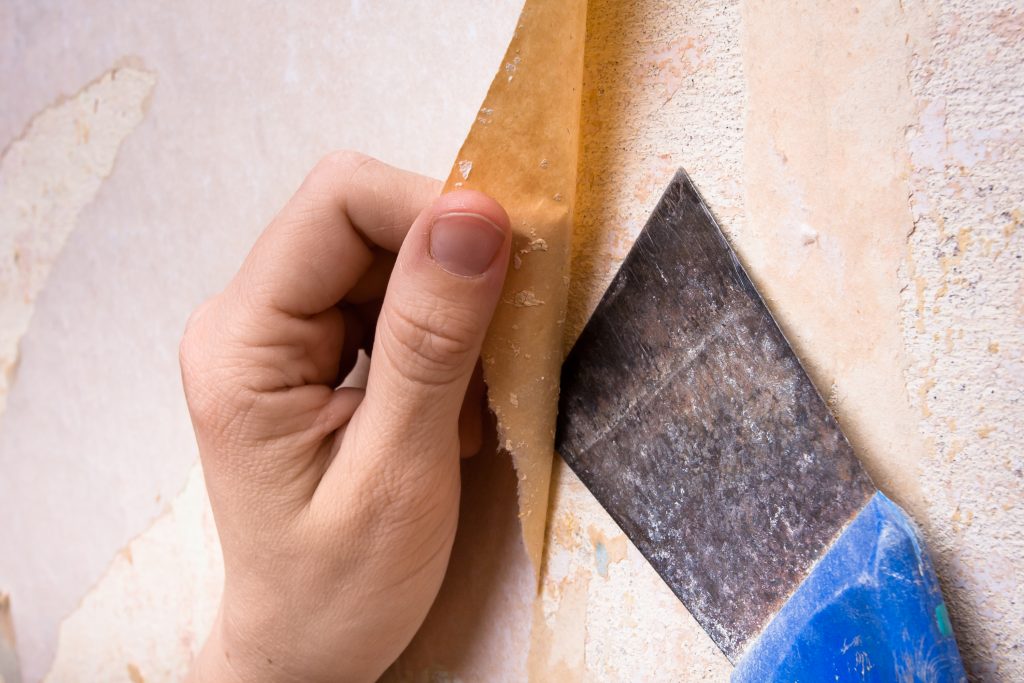
Wallpaper Remover Hand Tools
Hand tools come in a variety of shapes and sizes, and each has its own unique purpose. Some of the most common wallpaper remover hand tools include scrapers, scoring tools, and steamers.
Scrapers are designed to remove the wallpaper once it has been loosened by a removal solution. They are typically made of metal and come in different shapes and sizes to fit different types of wallpaper.
Scoring tools are used to make small cuts in the wallpaper, which allows the removal solution to penetrate more easily. They are typically made of plastic and are designed to be used on delicate surfaces and vinyl wallpaper.
Scoring Tool
A wallpaper scoring tool is a common chemical-free wallpaper remover solution, particularly when dealing with wallpaper that has been painted over or is firmly attached to the wall with wallpaper glue. The tool is designed to make small perforations in the wallpaper, allowing the wallpaper removal solution to penetrate and loosen the adhesive.
To use a scoring tool, simply run it over the surface of the wallpaper, being careful not to damage the wall beneath. This will create small holes in the wallpaper that will allow the removal solution to do its job. Once the solution has had time to work, you can use a scraper to gently lift the wallpaper away from the wall.
It's important to note that scoring tools should be used with care, particularly on delicate surfaces. Always follow the manufacturer's instructions and take care not to apply too much pressure, as this can cause damage to the wall or the scoring tool itself.
Putty Knife

A putty knife is a common tool used for removing wallpaper. It's a versatile tool that can be used to scrape away old wallpaper, as well as to apply wallpaper removal solution or patching compound to temporary wallpaper.
To use a putty knife for wallpaper removal, first, score the wallpaper with a scoring tool to allow the removal solution to penetrate. Apply the solution to the wallpaper and let it sit for the recommended amount of time. Then, use the putty knife to gently scrape away the wallpaper, starting at the edges and working your way inward. Take care not to apply too much pressure, as this can damage the wall beneath.
Putty knives come in a variety of sizes and shapes, so choose one that is appropriate for the job at hand. It's also important to keep the blade sharp and clean to ensure that it's effective at removing stubborn wallpaper too.
Wallpaper Steamer Wallpaper Removal Solution
Using a wallpaper steamer to remove wallpaper is an effective method to tackle wallpaper removal that can save time and effort. The steamer works by heating the wallpaper and the adhesive underneath, causing the wallpaper to soften and become easier to remove.
To use a steamer, first, score the wallpaper with a scoring tool to allow the steam to penetrate. Fill the steamer with water and let it heat up. Hold the steamer against the wallpaper, moving it in a circular motion to ensure that the steam reaches all areas of the wallpaper. Once the wallpaper has been heated sufficiently, use a wallpaper scraper to gently lift the wallpaper away from the wall.
If you’re not having any success with these methods, it might be time to call the professionals. They have all the best strategies and devices at their disposal and can take the burden and mess off your shoulders.
Creating a high-quality wallpaper installation requires the right tools and precise attention to detail. From the substrate preparation process to accounting for the particular topography of each room, the steps for hanging wallpaper can be daunting. Following these instructions will help make the process easier and more enjoyable.
What You'll Need To Install Wallpaper
In addition to technical products, such as a seam roller and a plastic smoother, you will need some basic tools to complete your project. These tools can be found in your toolbox or workroom:
- pre-pasted wallpaper
- paint roller
- fresh paint nap
- clean paint tray
- plastic drop cloth
- measuring tape
- sponge
- utility knife
- level
- pencil
- plastic smoother or wallpaper brush
- straight edge
How To Hang Wallpaper
Step 1: Clean Your Walls
Before wallpapering, the wall should be prepared by wiping it down with a microfiber cloth dampened with isopropyl alcohol. Once dry, any kinks should be inspected and filled with a non-shrinking joint compound. If there are smaller imperfections, use a drywall knife to scrape them off or sand them down with 50-grit sandpaper.
To ensure optimal adhesion, cover the entire wall with a wallpaper-sizing product. It will help the paper stay in place and reduce the risk of shrinkage.
Step 2: Measure Your Walls and Draw a Central Plumb Line

To center the dominant element of the wallpaper on the 'focal wall,' measure the width and the wall height and locate its midpoint. Cut a small strip of wallpaper, and place the element over the center. Make a pencil mark at the wall's leading edge, and draw a 'plumb line' from the floor to the ceiling to indicate where the next strip of wallpaper should hang.
If the wall has features such as a window or door frame, draw the line in the center of the widest open space.
Step 3. Prep the Wallpaper
Cut a piece of wallpaper roll to the height of your wall plus four inches, allowing two inches of excess paper at the top and bottom to align and trim. Immerse in cold or lukewarm water trough and fold each end towards the center, exposing the pattern and ensuring the pasted sides are touching. This booking process allows the glue to activate and soak into the paper fibres.
If the wallpaper is not pre-pasted, apply an even layer of wallpaper paste to the paper using a roller.
Step 4. Hang the First Strip

Gently apply the first strip of wallpaper from the ceiling, ensuring a two-inch overlap at both the ceiling (crown molding) and the corner. Smooth the strip down the wall with a clean cloth or wallpaper brush to remove any air bubbles before using a smoother or squeegee to flatten it.
Create a faint line along the bottom half of the strip to make it easier to cut away any excess wallpaper.
Step 5. Trim Excess
Allow the wallpaper to adhere or cure on the wall surface for 20 minutes. Subsequently, use a utility knife or scissors to trim the excess material off each end.
Step 6. Apply the Rest of the Wallpaper

Ensure you provide adequate space to accommodate your pattern when cutting. Hold the paper against the wall and mark where the cutting should start. Afterward, attach the paper to the wall, making sure it is aligned with the previous strip.
Pay attention to the designs, ensuring that the paper does not overlap. Each strip must meet the former at the edge without any gaps. Additionally, leave a few inches of space at the top and bottom.
Repeat this pattern for all the wallpaper strips. When you reach the last corner or doorway, use a straight edge and an Exacto knife to create a neat edge.
Step 7. Keep it Clean
Using a damp sponge, carefully remove any excess adhesive from the paper's face and push lightly toward the edges. Then, clean the woodwork and ceiling with a wet sponge. Once all strips have been hung and any excess trim cut, you can step back and admire your newly decorated room!
How To Stick Wallpaper In Corners
Wallpaper applied around a corner does not adhere properly and tends to peel away from the wall over time. For a durable fit:

Take multiple measurements of the distance from the edge of the last strip to the corner to ensure enough paper to round the corner in all places. Cut the strip to 1/2 inch extending along the adjacent wall, and apply wallpaper glue. Hang the panel and trim it with a single-edge blade, leaving 1/8 inch of paper beyond the corner. Align the next strip so that it overlaps the 1/8-inch extension.
Experience Professional Wallpaper Installation In Toronto with Apex Wallpaper
For a successful wallpaper project, it is essential to carefully select patterns and colours that complement the furniture. Otherwise, the home may be left with an unappealing aesthetic.
Apex Wallpaper is the perfect solution for those who don't have the time to transform their home through Wallpaper Installation Toronto. Our professional wallpaper installers are highly experienced and guarantee exceptional results every time, so you can be confident your ideas and designs will be delivered to the highest standard.
Redesigning a room in your home with some wallpaper can be a great way to add some life to your home. However, trying to to know how to trim and cut wallpaper can sometimes be tricky when you're trying to get it done right. That, along with nooks, tight corners, window frames, outlets, and other obstacles can make trimming wallpaper a bit tricky.
What You'll Need
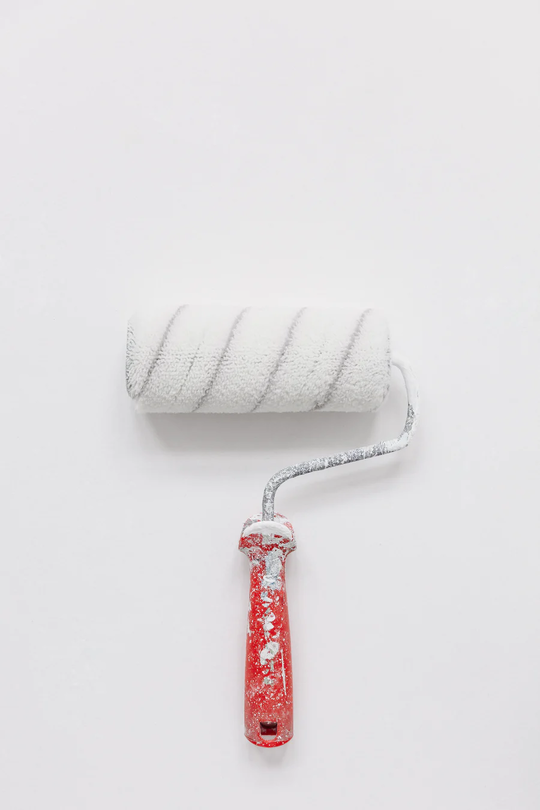
Here are a few things that you may need:
- Wallpaper
- Stepladder
- Measuring tape
- Worktable
- Pencil
- Scissors
- Newspaper or drop cloth
- Wallpaper paste or adhesive (if the wallpaper is not pre-pasted)
- Long level
- Wallpaper brush
- Straightedge (putty knife will do)
- Utility knife blade
- Sponge
- Lukewarm water
- Seam roller
STEP 1: Prepping
The first step in any DIY home project is to prepare the area. In this case, you have to prepare the wall surface by wiping down the walls with a sponge and bucket of warm water. You will want to wash the entire surface before you hang the paper. After the walls have dried thoroughly, sand away imperfections and fill in uneven areas with drywall paste using a large putty knife. Let dry for 24 hours, then sand away the excess paste and wipe away any remaining dust from the walls.
Next, you can apply primer with either a brush or roller to the walls to help the wallpaper stick. Be sure to let the primer dry for at least two hours before hanging the wallpaper. To prepare the unpasted wallpaper, use your measuring tape to measure the height of the wall you are going to paper. Read the manufacturer's instructions on the wallpaper label for the dimensions. As a rule of thumb, add about 5 cm to the top and bottom of the wall height so you can deal with potential differences in the height of the wall if necessary. Then, once you have your wall size, you can cut your wallpaper roll into strips with a razor knife or a taping knife.
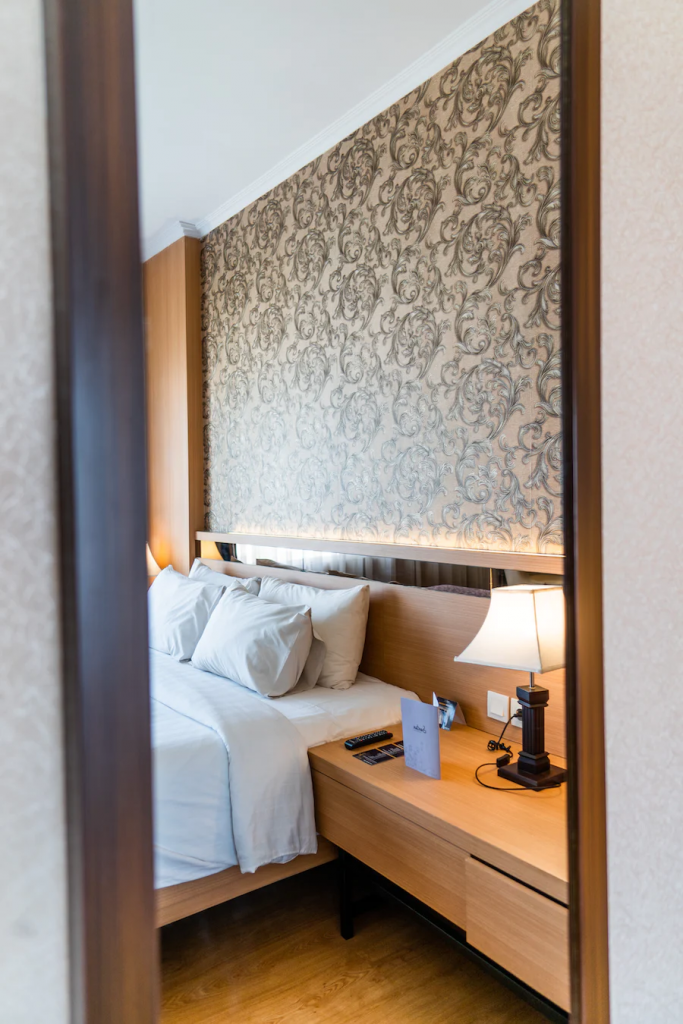
STEP 2: Hanging
The next step in the process is to hang the actual wallpaper. For the first strip, you will want to start with a plumb line. This pencil line is your guide to hanging the other panels of wallpaper. To make your plumb line, leave a pencil mark on the wall using a level. Then, you can hang the first panel of paper in the room, aligning one edge with the line. You should use multiple plumb lines throughout the room so that your paper job has a professional look.
Roll out the paper and then apply the paste to the paper with a paint roller. Don't dunk! Roll the adhesive on with the paper backing facing out and then be sure to wipe the wet wallpaper to remove any excess solution. Be sure to not let the water soak into the drywall or it may cause damage. Press the seam between pieces firmly with a seam roller, but be sure to not apply too much pressure. Use a damp sponge to clean any paste residue that squeezes out. Also be sure to use some sort of straight edge to get rid of any air bubbles in each strip, pressing firmly against the ceiling line.
When starting with an inside corner, allow some overlap with the paper on the adjacent wall in order to hang it plumb so that the paper pattern lines up. This is called a wrap and overlap seam where one drop is overlapped with the next drop on your room's inside corners. Cut a dry strip of the first length with an extra 1/8th inch and hang the freshly cut side of the paper into the corner. You can then align the next strip from the outside corners of the next wall so that it overlaps and the pattern on the paper matches up.
STEP 3: Trimming
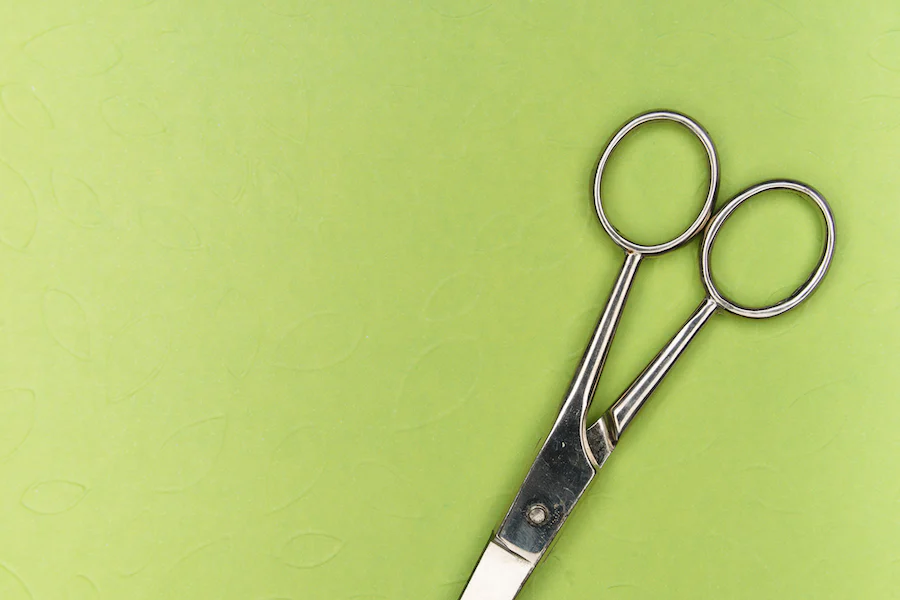
Once you are satisfied with the papering and you are certain it is safe to trim the wallpaper, you can begin to trim away the excess wallpaper with scissors. For strips that meet the trim edges or the ceiling, make a relief cut to get rid of most of the excess. Relief cuts can save you time as you hang the wallpaper before continuing with trimming away extra length and excess paper.
You can also use diagonal cuts to get clean lines around different edges like a window or outlet. For electrical outlets, find the outermost corner of the outlet cover with your finger, then make a diagonal cut straight across the wall socket from one corner to the other. Do the same on the other side to make a cross. Then you can peel back the four points and use a leading edge and blade to trim the paper around the socket. This same practice can be applied to a window frame and window trim. Once you're finished, let the wallpaper dry and then you are free to enjoy your newly papered interior walls!
Simple, monochromatic walls can give your house a minimalist appearance, which can be a pleasing design decision. However, if you want more colour or bright designs, wallpaper is a great option and can drastically change the way a room looks.
A less expensive option than traditional wallpaper is peel-and stick-wallpaper, which may be applied to walls without the use of obtrusive paste. Instead, this item has a backing made of glue that requires little to no force to cling to walls.
Be aware that peel-and-stick wallpaper often sticks best to smooth, eggshell, satin, or semi-gloss finished walls. To make sure the product will adhere to the sort of walls you have, check the manufacturer's instructions for the wallpaper.
Carefully measure the area you intend to cover to ensure you buy the right amount of peel-and-stick wallpaper. Purchase a little bit of extra peel-and-stick wallpaper than you need in order to account for mistakes and challenging spaces like windows, doors, or little nooks.
Keep reading for step-by-step instructions on how to apply peel-and-stick wallpaper, as well as some general tips and tricks on how to get it just right.
First, Prepare The Walls
Make sure the wall has been adequately prepared before you begin hanging the peel-and-stick wallpaper. Before cutting the wallpaper to fit around the area you wish to cover, start by removing the outer plates from any outlets or light switches.
Make sure to turn off the power before removing the outer plates from any outlets or light switches. The surface of the wall should next be cleaned by wiping it down with a mild, non-abrasive cleanser with a damp sponge or towel.
Newly painted surfaces must cure for at least four weeks before applying peel-and-stick wallpaper. Check the peel-and-stick wallpaper manufacturer's directions to ensure that you are preparing the wall properly for adhesion.
Second, Make A Guide For Your First Strip With A Straight Edge

Making a template for the first strip of wallpaper is one of the most crucial phases in the application process. This will act as a guide to make sure every other wallpaper strip is lined up correctly. You can begin in the middle of a wall or at the corner, but the guide must be perfectly straight.
Take an accurate measurement of the peel-and-stick wallpaper's width, and then pencil that measurement onto the wall. Draw a line in accordance with your marks from the ceiling to the baseboard (or the region you're covering) using a straight edge and a level.
Remember that if you began your measurement in the middle of the wall, it could be helpful to draw a second guideline to show where you began. This will make it easier to guarantee that the removable wallpaper is absolutely straight when it is applied.
Third, Apply Peel-And-Stick Wallpaper

Starting at the highest place where you'll be wallpapering, peel off roughly 30 cm of the adhesive backing and align the wallpaper with your lines. Peel off the remaining backing while pressing and smoothing the wallpaper against the wall from top to bottom. To get rid of air bubbles, smooth the wall using a plastic smoothing tool. Use your straight-edge utility knife to gently cut along the baseboard and remove any extra after the entire piece has been glued to the wall.
Fourth, Repeat After Matching Patterns

To achieve a seamless appearance, align the pattern of the wallpaper while adding subsequent pieces. In order to have the seam lay as flatly as possible, slightly overlap the second piece with the first. Repeat to cover the entire surface, trimming the bottom as necessary.
Fifth, Work Around Windows and Outlets

Allow the wallpaper to overlap any window or door frames or electrical outlets that you come across. Once the piece is in place, trim the excess using a utility knife and a straightedge. Next, smooth the paper against the wall all the way around the window or outlet. Make sure all electrical outlets and switch plates are still off, then use a utility knife to carefully cut away the paper covering the aperture. The outlet cover or switch plate will cover up the majority of flaws, so don't worry if the hole has rough edges surrounding it.
Sixth, Check For Air Bubbles
Use the point of your utility knife or a pin to make a tiny hole in the centre of any remaining air bubbles. After that, smooth the wallpaper by pressing down to let out the trapped air.
When designing a wall space, various elements and tools help you add colour, texture, pattern, and depth to a room. And wallpapers are an ideal way to provide the space with that unique touch that it lacks. Here are some suggestions and expert tips for choosing the right wallpaper for your living room.
Which Wall Should I Wallpaper?
Where you want to apply the wallpaper is crucial since it will need good planning and selection. Wallpaper can be installed to divide or accentuate wall space separated by built-ins.
Entire Room
Applying wallpaper on the entire room suggests that the tone or pattern can become extreme, so you need a more subtle pattern and coloring when wallpapering all four walls.
Accent Wall
Some living rooms already have a focal point like a fireplace mantle, a big window with a view, or large artwork. The wallpaper should only optimize that room and not become an overpowering addition. In such a case, you can wallpaper a single accent or feature wall and paint the rest that will complement the décor and style of the room.
Regardless of your decision, always consider other areas of the room that could also reap the benefits of the application, including ceilings, doors, or fireplace faces.
Wallpaper Ideas For a Living Room
Selecting the right wallpaper design is not a simple task. Because there are different types of wallpaper for every room, choosing the one whose design best suits your living room is vital. Several factors to consider for your living room wallpaper are color, style, textures, and pattern.
Material Of Wallpaper
Depending on the wallpaper's materials, you can create various impressions and compositions. The primary materials from which wallpaper is made are:
- Non-woven wallpapers - easy to hang and easy to remove
- Vinyl (i.e., paper-backed, PVC, or solid vinyl wallpapers) - most commonly used because of its high durability
- Traditional wallpaper - just made of paper and always needs glue
More delicate materials must be utilized for rooms that won't encounter too much damage and are not in high-traffic areas.
Pick Your Colour
Colour sets the mood in a room. Choose a color according to the room's scheme, or highlight the wall in a contrasting shade.
To make a room look bigger and wider, choose wallpapers with a lighter, pastel shade. Light colors invoke coolness, while dark colors are dramatic, making the walls recede. Warm colors like red, yellow, and orange create a lively and uplifting ambiance in your living space. If you usually entertain, try out vibrant and exciting shades rather than cool hues like blue and green that generate a serene feeling in a room.
Opt for colors from the color palette of the rest of your décor. Furniture with dark finishes, like mahogany, stands out against light colors. And dark or intense shades bring out the lightness of wood furniture.
Maximize The Lighting
If the room receives a good amount of natural light, go for wallpaper with a light or neutral color pattern. In a space that is not as well-lit, a shiny metallic wallpaper will make a space feel brighter, reflecting light for a dazzling and gleaming effect. Furthermore, consider patterns with smooth surfaces, which reflect almost all light.
Complement The Style You Want
Stick to a concept and style when choosing wallpaper. Consider a wallpaper style that matches and mimics the living room's design aesthetic.
- Formal = damasks, large-scale patterns
- Glam = embossed, flocked, crystal, reflective, or glittery patterns
- Casual = plant, floral or textured print
- Country = plaid, gingham, or country motif
- Rustic = textured, plaid, wildlife pattern
- Victorian = floral damasks
- Contemporary/Modern = geometric, abstract design
- Romantic = damasks, florals

Check Out Textured Wallpaper
Textured wallpaper provides a range of design purposes. Wallpapers with texture can hide flaws or imperfections, or architectural deformities. They also add an extra dimension, textural interest, and character, and warm the space.
Play With Wallpaper Patterns
A plain wallpaper presents a subtle visual break for a densely decorated space. Patterned wallpapers can have tactile surfaces and mirror a material's look, including wood, fabric, leather, and marble. However, they can be effective only if you pick suitable patterns.
A large-patterned wallpaper appears more dramatic and makes a small room feel more relaxing. You may apply a small patterned paper in a space with many windows, doors, and wall hangings, as smaller-scale patterns create a feeling of spaciousness. Large prints look best in a larger room, while small-scale patterns work well for smaller rooms.
Repeated patterns are another incredible illusion of making a space appear bigger than it really is.
Stripes can also do wonders. Vertical stripes can deliver the optical illusion of a higher ceiling. Similarly, horizontal stripes can make a room feel more expansive. Whatever your choice is, a lovely striped wallpaper is excellent for an accent wall.
Looking For The Right Wallpaper For Your Living Room?
When you follow our tips, choosing a beautiful wallpaper for your rooms is a breeze. Transform a simple living room, dining room, or hallway into an eye-catching space with the proper wallpaper application and with the help of professional Wallpaper Installation Toronto.
APEX is ready to assist you with that beautiful wallpaper that matches your taste and budget! Call us at 416.833.1662 and let wallpaper restore vitality to your living space.
Commercial Wallpapering has been the ideal wall-treatment option chosen for offices, hotels, hospitals, conference rooms, large hallways, assisted living facilities, and almost any high-traffic place where durability and ease of renovation are vital.
Commercial Wallpaper is a large sheet of fabric-backed vinyl intended for public areas and other commercial settings. They are designed to use inappropriately developed and maintained establishments to reduce condensation and prevent moisture infiltration and accumulation at wall recesses and surfaces, especially in warm, humid climates. This wallpaper stands out as a durable, lifelong wall covering needing minimal maintenance.
Hanging commercial wallpaper takes some care and patience, though it does not need to be complicated. If you follow this guide, your job will be done in the blink of an eye.
Step-By-Step Process on Hanging A Commercial Wallpaper
Step 1
Start by removing electric wall plates, heat registers, and light fixtures. Make sure there is no furniture blocking the wall. Cover the entire floor surface in the room where you will be wallpapering with protective plastic sheeting or a drop cloth. You must also cover any objects attached to the wall to keep them clean.
Step 2
Clean the walls thoroughly. The wall surface must be flawless, leveled, dry, and free of mould, grease, or stains. Seal any holes with spackle using a putty knife and ensure it dries completely before proceeding. Scrape the walls with a drywall knife or sand them with 50-grit sandpaper to clear smaller defects.
Step 3
Measure the wall's height and width, then cut the length of the wallpaper with an additional 4 inches longer than the wall. The best approach is to cut and hang one strip at a time to ensure the pattern is a perfect match and prevent needless paper waste.
Step 4
Sizing is a fast-drying primer made mainly for wallpaper. Even with a reliable primer-sealer, using wall size changes the quality of your walls to make wallpaper installation easier and lower the possibility that the paper will shrink. If time permits, allow the sizing to dry overnight, though it is okay to move on and apply your paper after the wall feels dry enough.
Step 5
Make sure all the rolls are not defective or damaged. Apply an even layer of paste with a 1/2" nap paint roller. Make sure to coat every inch of the wallpaper, that includes the sides and the corners.
Book the wallpaper sheet by folding each end inward to the midpoint, allowing the paper to relax before applying.
Step 6
After a couple of minutes, unfold the first strip, and pick it up gently. Because of its width and weight, you may require an assistant to hang commercial wallpaper. We suggest applying the wallpaper from left to right. Apply your strip to the top of the wall, then gently smooth it down the wall with your hand or with a paper hanging brush, starting in the middle and advancing toward the edges to eliminate air pockets and wrinkles. When it's not going down perfectly, gently peel it off, then apply it again. Continue until you have spread the whole strip of wallpaper.
Trim the tops and the bottoms of each wallpaper using a utility knife.

Step 7
When applying the second panel, matching the pattern to the previous sheet is the biggest concern. Repeat step 5, then bring the strip up to the wall, abutting it to the first panel as firmly as possible without overlapping. Once done, gently press your paper, shoving away from the matched edge with a cloth.
Every room will have corners unless it’s round. Measure the first panel's width so it reaches the corner crease and wraps over it by one inch. Hang the second panel by applying the left edge directly into the corner crease, overlapping the extra one inch. Roll seams with a seam roller to secure adhesion. If you find a loose seam in an overlapped wallcovering, use a vinyl-to-vinyl glue to reaffix it.
Step 7
Wipe the whole surface of the wallpaper with a damp sponge to remove excess adhesive.
Step 8
Repeat the process until the entire wall or room is covered. For obstacles like doorways and windows, cut where the wallpaper meets the top of the frame and lay flat the wallpaper against the wall. Then, trim any excess overlap.
Using a knife, score an X over each socket or switch, to make four triangular flaps. Gently crease the edges of your paper, and then cut the flaps against those creases. Now, sit back and enjoy the new view!
Apex Wallpaper For Commercial Wallpaper Installation
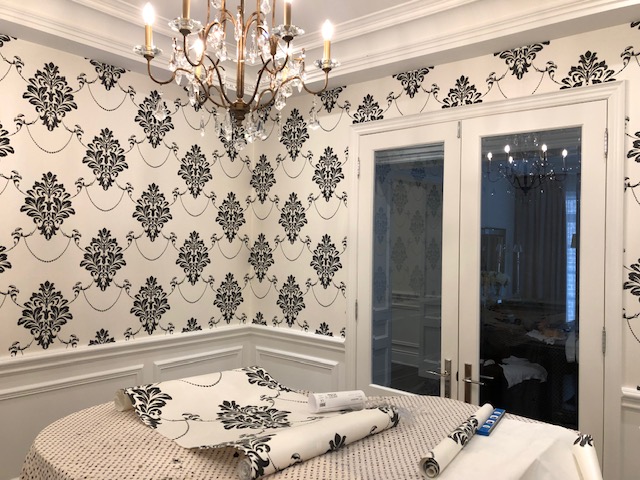
Want to hang new commercial wallpaper in your building's lobbies or common areas? We’ve got you covered. Our experts can work with you to develop solutions that suit your room and your establishment's necessities. You can count on Apex Wallpaper for outstanding results from our specialized personnel and highly qualified wallpaper installers.
Call us at 416.833.1662 for more information. We offer competitive pricing and superior quality for every wallpaper installation in the Toronto area.
Wallpaper removal and installation may seem like an easy task, but in reality, it can take a lot of expertise to get the job done right. Along with that comes a whole selection of different tools and equipment that make the job possible—no, just having wallpaper isn't enough. With the right tools, a skilled wallpaper installer can make easy work of any wallpaper job.
If you're thinking about wallpapering part of your home or are wondering why it may be worth it to hire an expert, it can help to know a bit about these tools and what they do. You might just be surprised at the many different tools needed for a quality wallpaper installation!
Essential Wallpaper Tools
Paste Brush
If you aren't using pre-pasted wallpaper, you are going to need some way to apply the paste before hanging wallpaper. While any brush you have lying around may do the trick, it is best to use a brush specifically designed for the task at hand. The reason is that the construction of a paste brush makes them ideal for getting the job done efficiently, and without damaging your wallpaper.

Seam Roller
A seam roller is used to apply pressure along the seams of your wallpaper after you install it. Seams are an area that can easily stand out after you hang wallpaper, and if you don't flatten them properly they may start to peel. Using a seam roller can make these seams invisible, and help to make your wallpaper last for many more years.
Smoothing Tool
There's nothing worse than hanging a sheet of wallpaper only to find unsightly ripples and air bubbles. Luckily, a lot of these issues can be fixed with a smoothing tool or smoothing brush. These tools allow you to efficiently smooth wallpaper, reach those tough corners and edges, and avoid damage.

Level
A level may be a simple tool yet it is infinitely useful. Hanging your wallpaper straight is one of the most important parts of the job, and most of the time your eyes simply can't do the trick, no matter how accurate you think they may be.

Plumb Line
Another useful tool is a plumb line, which is essentially a string with a weight on one end. When hung from the ceiling, gravity pulls the line straight downwards, allowing for perfect vertical alignment.
Chalk Line
A chalk line works a bit like a plumb line but can be used in multiple directions and leaves behind a visible mark on the wall. Essentially, a chalk line uses a string coated in chalk dust to draw a line on the wall between any two points.
Tape Measure
A tape measure will come in handy for multiple different tasks when wallpapering. Most importantly it helps you to measure your room so you know how much wallpaper you need, and it will also help you to measure the length of wallpaper when installing.

Utility Knife
Rarely will your wallpaper sheets be the perfect size for your wall, and you will usually need to trim them down, especially on the floor and ceiling. One of the best tools for this job is a utility knife. These knives can make quick work of cutting and, unlike scissors, they provide a lot more flexibility for those hard-to-reach angles.
Consider a knife with a snap-off blade. These allow you to always make sure your knife is as sharp as possible, so you won't do any unnecessary damage to your wallpaper as a result of dull tools. Along with your utility knife, a straight edge may be useful to ensure your cuts are under control. Remember - you can't undo a cut once it has been made.
Putty Knife
A putty knife is one of the most versatile wallpaper tools. One primary use is as a wallpaper remover, for scraping and removing wallpaper. It may also be used in a pinch as a smoother or straight edge. Finally, it can be used as intended, to fill holes or dents in the drywall before you install your new wallpaper.

Ladders
The walls in a home are on average around nine feet, and often higher. Even for the taller among us, it can be hard to reach those high ceilings to properly install wallpaper. A ladder will be an essential tool to make sure your wallpaper is installed correctly from floor to ceiling. It's important as well that you have a proper ladder, and not try to use other things like furniture to boost your height, as this can pose a major safety risk.
Wallpaper Removal Tools
You may need to strip old wallpaper before you install a new layer. This can be a tough process if you just start ripping and tearing, but with the right tools, it can be made easy. One of the most common ways is to wet the old wallpaper with warm water from a spray bottle or sponge to loosen the adhesive. A wallpaper scorer can help water soak in by making small holes in the paper, and a steamer may help to loosen adhesive as well. Finally, a scraper tool can be used for those spots that don't peel easily.
Conclusion
Overall, installing wallpaper can take a lot more tools than you may expect. Though the right tools can make the job easier, many homeowners prefer to work with a professional wallpapering service to make sure the job is done right.
If you need wallpaper installation in Toronto, look no further than Apex Inc. Since 1998, Apex has provided customers with high-quality wallpapering services that transform your home one wall at a time.
If you're planning to have contemporary, stunning walls at home, putting up wallpaper in your room or on just an accent wall is an excellent alternative to painting. Wallpaper is a unique element to living rooms, bedrooms, and other rooms, and a powerful statement of your taste. If you're searching for a wallpaper installation cost guide, you're on the right page.
Average Cost To Install Wallpaper
Hanging wallpaper costs around $310 to $775, or roughly $527 on average. The labor cost to install wallpaper ranges from $1 to $7 per square foot. The expense can be more excessive if the wallpaper specialists must do some surface repair on your wall. Also, the type of wallpaper you pick, your walls’ sizes, and if you have to remove old wallpaper are the leading factors in calculating the total cost.
Hanging Wallpaper Cost Per Square Foot
You'll pay anywhere from $1 to $7 per square foot to hang wallpaper. The customized paper starts at approximately $5 per square foot and can increase to $100+ if you ask for a fancy design. You often purchase wallpaper by the roll, not by the square foot.
Hanging Wallpaper Cost Per Roll
On average, it costs $25 to $35 to hang a good, ordinary single roll of wallpaper. A typical roll is 28-30 square feet.
But wallpaper is also produced in double rolls, which are between 56 and 60 square feet. In this case, you can expect to spend $30-50 in labor costs on a simple double roll.
More intricate designs and higher quality paper will be more expensive.

Factors Affecting Installation Wallpaper Costs
Type Of Wallpaper
The material is one of the factors that can influence the installation expense. Each material has a different price, offering a distinct look and approach to the room.
Generally, average-priced wallpapers will run between $20 and $50 per roll, though these vary depending on the material, type, and brand. If you’re wondering about specific wallpaper prices, look at the approximate costs below.
Wallpaper Material Cost:
| Material | Per Roll | Per Square Foot |
| Vinyl Wallpaper | $60 – 80 | $1.76 – 2.33 |
| Vinyl-Coated Wallpaper | $58 – 78 | $1.67 – 2.23 |
| Vinyl-Coated Fabric Wallpaper | $90 – 105 | $2.50 – 3 |
| Grasscloth Wallpaper | $80 – 125 | $2.90 – 4.50 |
| Foil Wallpaper | $75 – 95 | $2.14 – 2.71 |
Wallpaper Type Cost:
| Type of Wallpaper | Per Single Roll |
| Peel and Stick Wallpaper | $20 – 45 |
| Pre-Pasted Wallpaper | $20 – 80 |
| Printed Wallpaper | $30 – 50 |
Wallpaper Brand Cost:
- Gracie Wallpaper Cost - These are hand-painted wallpapers and run about $175 per roll.
- Thibaut Wallpaper Cost - Thibaut is famous for pattern, vinyl, and performance models in different colours and prints, and costs around $35 to $90 per roll
- Phillip Jeffries Wallpaper Cost - Phillip Jeffries specializes in natural materials such as raffias and grasses and runs about $25 to $150 per roll.
Dimension Of The Wall
Another factor that you must take into account is the size of the wall. The wall measurements decide how many rolls are needed and the time it takes to put up. It will help with the cost estimate of the overall project.
A roll is typically enough to cover 30 square feet. The larger the wall, the more paper you need; hence, the higher the installation cost.
However, installing wallpaper in rooms with many windows, doors, cabinets, and built-in closets will be more difficult, and therefore more expensive.
Wall Condition
The condition of your walls is also a significant factor. If an existing wallpaper has to be removed or your walls have a rough texture, you must buff that before installing new wallpaper. How much wallpaper must be removed and how demanding the task is will add to the total expense of wallpaper installation.
If you wish to reduce the wallpapering project cost, you can prep your damaged walls, including filling or fixing any cracks, and cleaning and scrubbing them before the paper installation.
DIY Installation Vs Professional Installation

Going for the DIY method is the obvious choice if you need to cut expenditures. But a sizeable wallpapering project might be more satisfactory if fulfilled by professional wallpaper hangers, mainly if you don't possess all the tools required to do the task properly.
An installation project done properly may take hours and cost a lot, however, when it is done correctly the wallpaper can last several years. So if you’re going to take on the task yourself, make sure you do your research and obtain all the correct supplies. But better yet, let a professional installer hang wallpaper in your home.
Looking For Wallpaper Installers?
Once you have estimated how much your wallpaper installation will cost, next, you must find professional Wallpaper Installation Toronto.
Apex Wallpaper has years of expertise in installation. And whatever type of wallpaper project you are working with, we can help with your wallpaper project to achieve an outcome in the first session. Call us now for more information on our wallpaper installation service and get free estimates.
Don't forget - with wallpaper, you can overhaul your rooms and make them reflect your unique tastes!